Docusaurus Alternative
DocsAlot vs Docusaurus
A direct comparison for teams choosing between Docusaurus's self-hosted framework control and DocsAlot's managed, agent-readable documentation workflow.
Read this when the real decision is not whether Docusaurus can publish good docs. It can. The real question is whether you want to own the docs stack yourself, or whether you want a managed system that already ships agent-readable outputs and automated updates out of the box.
Product context
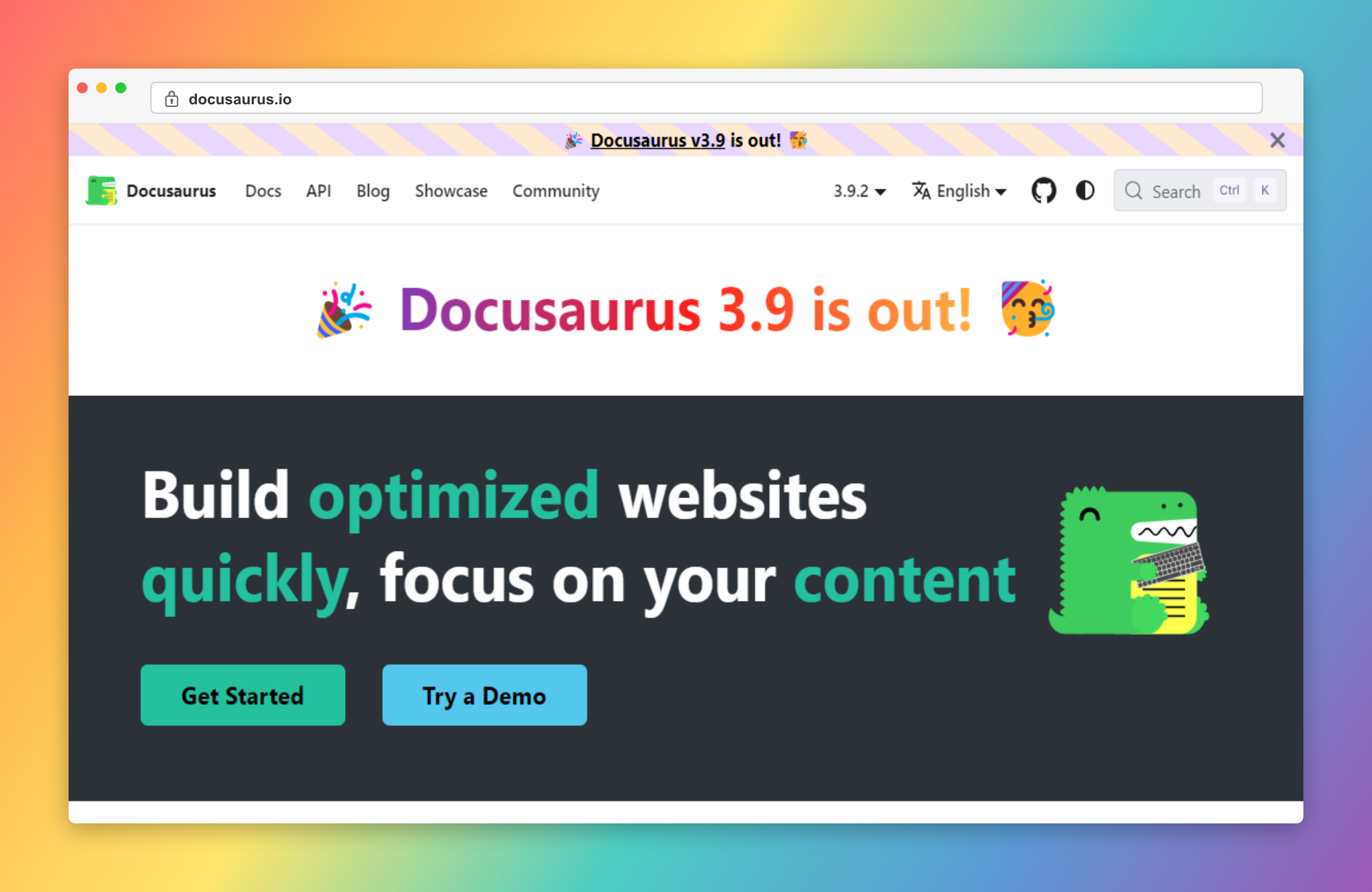
See the product in context.
Use the screenshot as product context only. The later correctness pass still needs to verify detailed claims, pricing, and product boundaries separately.
Why teams pick DocsAlot
Where DocsAlot tends to pull ahead.
These are the areas where teams usually stop treating Docusaurus as good enough and start looking for a docs workflow with less manual upkeep.
Lower Upkeep Once Docs Stop Being Small
DocsAlot is stronger when the documentation job keeps growing and the team no longer wants engineers hand-maintaining Markdown, search, deployment, and content updates separately.
Agent-Readable Docs Out of the Box
Use llms.txt, skill.md, hosted MCP, and automated updates so your docs do not stay invisible to agents unless engineers build that layer themselves.
Managed Publishing Instead of Stack Ownership
Run public documentation without owning React theme customization, CI/CD, plugin decisions, search setup, and long-term framework maintenance yourself.
Automatic Documentation Refresh
DocsAlot keeps documentation aligned with product and code updates, reducing stale content that teams often face in Docusaurus.
AI Drafting for New Features
Generate first-draft docs for releases, APIs, and workflows so teams ship faster than manual workflows in Docusaurus.
Pricing model
How the cost shape changes.
Use this as packaging context only. The later correctness pass still needs to verify plan boundaries, current limits, and exact pricing details.
Docusaurus has no SaaS subscription. The real cost is hosting, search, CI/CD, theme customization, dependency maintenance, and manual content ownership over time.
Free startup tier for first launch, $99/month Team plan for production docs, with hosting, publishing workflow, and AI-first upkeep built in.
Side-by-side matrix
Compare workflow, cost, and maintenance.
This table exists to answer the buying question directly, not just to stack feature checkmarks side by side.
Swipe sideways on mobile to view the full matrix.
| Dimension | DocsAlot | Docusaurus | Takeaway |
|---|---|---|---|
| Open-source control | Limited | Strong | Docusaurus if repo-level ownership and React customization are the main requirement. |
| Managed publishing | Built in | Self-owned | DocsAlot if you do not want to own deployment, framework, and search choices. |
| Agent-readable delivery | Included | Extra work | DocsAlot if the docs need to be visible to agents without another engineering project. |
| Documentation upkeep | Lower | Manual | DocsAlot when the team wants less recurring maintenance work. |
| Versioning and i18n | Good | Strong | Docusaurus if versioned open-source docs and localization are core requirements. |
| Broader docs program fit | Broader | Developer-docs centric | DocsAlot if one system needs to cover developer docs, onboarding, and product education together. |
| Engineering ownership required | Lower | Higher | DocsAlot if the team wants fewer docs-stack responsibilities. |
| Documentation Velocity | High | Medium | DocsAlot - Faster drafting and iteration cycles. |
This matrix is intentionally dense because these pages are meant to answer buying questions, not just act as thin keyword landing pages.
Long-form read
What this comparison means in practice.
Read this as the operating-model summary: Docusaurus is a self-owned docs framework, while DocsAlot is the managed workflow that also makes the docs visible to agents out of the box.
Docusaurus and DocsAlot do not compete on the same terms as two hosted SaaS tools. Docusaurus is a framework decision first. It gives the team full repository control, React and MDX customization, versioning, localization, and the freedom to own the entire documentation stack end to end. That makes this page less about feature parity and more about whether the company still wants documentation to behave like a frontend engineering project.
Docusaurus is strongest when that answer is yes. If the docs site is part of the engineering stack, if open source is a real requirement, or if the team needs deep React-level customization with long-term repository ownership, Docusaurus remains a strong choice. It is especially good when the main job is versioned developer documentation or open-source project docs and the company is willing to own the deployment, search, framework maintenance, and content workflow around it.
DocsAlot is stronger when the company has started feeling the hidden cost of that control, especially once agent-readability matters. A self-hosted framework can publish beautiful docs and still leave them effectively invisible to agents unless the team adds llms.txt, MCP, agent-facing structure, website and dashboard capture, and update automation itself. DocsAlot is the better fit when the goal is to publish technical docs without owning the framework, while also getting AI-readable outputs, hosted MCP access, and a workflow that keeps documentation moving faster.
That is why the pricing story should be read carefully here. Docusaurus itself is free, but the documentation system is not free once hosting, search, customization, maintenance, and recurring engineer time are counted honestly. If full open-source ownership is the requirement, Docusaurus still wins that argument cleanly. If the real need is lower upkeep, faster documentation throughput, and fewer docs-stack responsibilities, DocsAlot is the more practical choice.
Product shape
What each product is optimized to do.
Two tools can overlap on outputs while still being built for very different documentation jobs. This is the higher-level operating-model read.
Docusaurus
What Docusaurus optimizes for.
Docusaurus is an open-source documentation framework that gives teams full repository control with MDX, React customization, versioning, localization, and self-hosted deployment. It is a framework decision more than a hosted vendor purchase.
DocsAlot
What DocsAlot optimizes for.
DocsAlot is a managed documentation system for teams that want to publish technical docs without owning the stack. It is stronger when the real constraint is maintenance burden, release-to-doc lag, agent-readability, and the need to cover more than a narrow static developer-doc site.
Fit guidance
Who should actually choose which tool.
Use this guide to separate "good enough today" from "built for the way the team wants to work next."
Docusaurus
Choose Docusaurus if you need
- You Want Full React-Level Control: The docs site is part of the engineering stack and the team wants to own UI, build tooling, and behavior directly.
- Open Source Is a Real Requirement: You want self-hosting, repository control, and the ability to customize or extend the framework without vendor dependence.
- Versioned Project Docs Are the Main Job: Your primary need is a docs-as-code framework for product or open-source project documentation, and the team can support it long term.
DocsAlot
Choose DocsAlot if you want
- You Want Less Maintenance Drag: The team is tired of owning search, deployment, content updates, and framework upkeep in addition to writing the docs.
- Your Docs Go Beyond Reference Pages: You need a broader system for onboarding, product education, and public-facing technical content, not only a self-hosted docs site.
- You Need Faster Drafting and Upkeep: Documentation velocity matters more than maintaining a custom React stack.
- You Want Managed Publishing: You would rather ship docs than own CI/CD, hosting, and the frontend framework around them.
Validate fit
Test the shortlist with real workflow signals.
Use the switching reasons below before you commit. The goal is not to prefer the louder product, but to choose the one that creates less documentation drag.
Why teams switch from Docusaurus
- The framework gave control, but long-term docs upkeep still depended on engineers.
- Search, deployment, and theme ownership became extra platform work around the docs program.
- The docs surface grew beyond developer reference and needed a calmer operating model.
- Manual Markdown maintenance could not keep pace with product and API changes.
- Docusaurus workflows require too much manual writing and updates.
- Documentation quality drops when release velocity increases.
What DocsAlot changes
- You Want Less Maintenance Drag: The team is tired of owning search, deployment, content updates, and framework upkeep in addition to writing the docs.
- Your Docs Go Beyond Reference Pages: You need a broader system for onboarding, product education, and public-facing technical content, not only a self-hosted docs site.
- You Need Faster Drafting and Upkeep: Documentation velocity matters more than maintaining a custom React stack.
FAQs
Questions that usually block the switch.
These are usually the questions that slow internal alignment, migration planning, or procurement once the shortlist is already real.
Can I migrate from Docusaurus?
Yes. Docusaurus content already lives in Markdown and MDX, so migration is mostly about moving content and rethinking how much of the old framework ownership you still want.
Is Docusaurus a direct hosted-docs competitor?
Not exactly. Docusaurus is an open-source framework choice. The real decision is control and self-hosting versus a managed documentation workflow.
When does Docusaurus still make more sense?
It remains strong for teams that want open-source ownership, React customization, versioned docs, and the ability to self-host every part of the stack.
Is DocsAlot cheaper than Docusaurus?
Not in raw software price, because Docusaurus is free. The better comparison is engineering time and maintenance burden versus a managed docs workflow.
What is the biggest tradeoff in this comparison?
The biggest tradeoff is ownership. Docusaurus gives you more stack control. DocsAlot asks you to give up some of that in exchange for less maintenance and faster publishing.
How difficult is migrating from Docusaurus?
Migration is typically straightforward with phased rollout: import existing content, map navigation, then enrich pages with automation where it adds the most value.
Keep researching
Keep the shortlist moving.
Move sideways from here if the shortlist is still open, or drop back into the earlier-stage head-to-head pages before committing to a direct DocsAlot evaluation.
Try the workflow
Ready to test whether DocsAlot fits your documentation stack?
Start with a trial if you already know the category fit, or use the free audit tools if you want evidence from your current docs before switching.